
"Arab coffee legacy"
146000 article(s) found

The spread of Coffee Culture
The spread of coffee into the Arab world: in 525 AD, Ethiopian troops invaded Yemen, and coffee beans were brought to Yemen by soldiers. According to records, coffee trees began to be planted in Yemen in 575 AD. Later, coffee beans were also brought to Egypt by Sudanese black slaves who were shipped to Egypt. After coffee was introduced into the Arab world, it was first used as a herb by Arabs to treat biases.

The latest knowledge of boutique coffee the latest details of Arabica coffee
When Europeans first came into contact with coffee, they called the seductive drink Arabian wine, and when conservative Catholics cursed coffee as the devil's drink, they never thought of what a precious thing they inherited from the pagans. As the first region in the world to drink and produce coffee, Arab coffee culture is like it.

World Coffee History Ethiopian Shepherds find Red Coffee fruits
In the sixth century, Ethiopian shepherds discovered red coffee fruits. In the eleventh century, Arab merchants spread coffee to Europe. In the 16th century, Franz Geora Kolschitzky, a Viennese, established the first coffee shop in Europe. He also started the trend of drinking coffee with milk. In 1554, coffee in Istanbul became black gold, and it was very popular with Ethiopian shepherds in the sixth century.

French Coffee Culture
When French coffee culture mentions the French city of Bordeaux, people may think more of the world-famous Bordeaux wine. But in fact, the commodity coffee in world trade has been closely related to the city of Bordeaux for many years. The first coffee shop in Europe appeared in the mid-17th century. With the development of coffee trade, the two French ports Le Alpha and Bordeaux have gradually become

On Coffee Culture in Coffee History
Coffee is a kind of culture, a kind of global culture, but also a kind of regional culture, which can be said to be a kind of global culture with regional differences. So different countries, combined with their different cultural backgrounds, thus formed different coffee cultures. Arab coffee culture as the first region in the world to drink and produce coffee, Arab coffee culture is like its coffee.

World Coffee History in the sixth Century Ethiopian shepherds discover red coffee fruits
In the sixth century, Ethiopian shepherds discovered red coffee fruits. In the eleventh century, Arab merchants spread coffee to Europe. In the 16th century, Franz Geora Kolschitzky, a Viennese, established the first coffee shop in Europe. He also started the trend of drinking coffee with milk. In 1554, coffee in Istanbul became black gold, and it was very popular with Ethiopian shepherds in the sixth century.

What are the top ten cafes in the world? (above)
Professional coffee knowledge exchange more coffee bean information please follow the coffee workshop (Wechat official account cafe_style) 1. Cafe de Flore Cafe (Caf de Flore) is one of the three famous cafes in Paris, located on the corner of Rue Saint-Germain and Rue Saint-Benoit (Rue St. Benoit) in the sixth district of Paris.
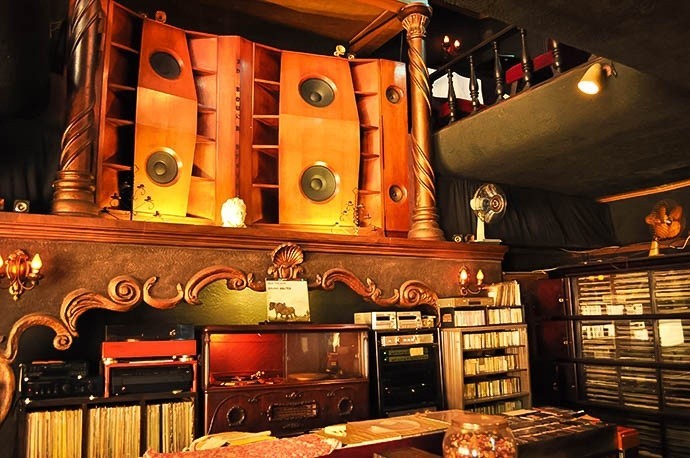
Shibuya, a world heritage music coffee shop, is famous for eating tea.
For the exchange of professional baristas, follow the coffee workshop (Wechat official account cafe_style). In the 1950s and 1960s, a coffee shop called "Mingqu eating Tea" was very popular in Tokyo. In addition to the coffee itself, the focus of this kind of cafe is mainly on classical music. The high-priced speakers and vinyl records are unmatched by ordinary families, and people are willing to go out and sit in the cafe.

Not drinking coffee during pregnancy increases the risk of miscarriage in pregnant women
Coffee is a very popular drink, and more and more people drink coffee. Once they have formed a hobby, they are afraid that it will not be easy to quit, so more fit grandmothers will worry about whether drinking coffee will affect the fetus. The research report points out that caffeine slows down the fetal heart rate and metabolism, so it has an adverse effect on the fetus, and caffeine lowers maternal blood.
Coffee, a wonderful drink popular in the world.
The word coffee originated in the African Ethiopian town of Kafa, which grew the world's first coffee tree. Coffee, tea and cocoa are called the three largest non-alcoholic beverages in the world. Coffee first appeared around the 8th century BC, but coffee was recorded in the works of the ancient Greek poet Homer and in ancient Arab legends. Coffee was recorded as

What does it mean to wash tea and wake up tea? how long does it take to wake up tea?
From childhood to childhood, every time I drink tea with my parents, in addition to Guangdong's unique hot washing utensils with boiling water, there is also an action that I still can't understand: rinse the tea, that is, pour the first tea! Yes, that's right! It's down! Of course, every time will ask the elders, why pour out, those are also the essence of tea, ah, pour out is not a bit of a waste
Coffee development history of Yemeni coffee beans and some African countries
Yemeni coffee bean planting area is also very large, coffee beans occupy an important position in the national economy. Yemeni Matari 999 mocha coffee (Mattar 999) has a unique wild and strong flavor. Yemen, a rather poor region of the Arab countries, was formed in May 1990 by the merger of the Arab Republic of Yemen (Northern Yemen) and the Democratic people's Republic of Yemen (Southern Yemen). Yemenis are used to drinking tea.
The Development of Coffee and the Promotion of Arabia, China and Turkey
The dietary use, cultivation and development of coffee in the Arab region are also related to Zheng he's voyages to the West in the early Ming Dynasty.

The course of spreading Coffee basic knowledge of Fine Coffee
Since when has coffee become an acceptable drink? The real time is unknown. But it is said that the record began in the early eleventh century and can be seen in ancient Arab documents. Before that, raw coffee beans were dried and then fried in the Arab region as stomach medicine, but it was later learned that coffee still had a refreshing effect, coupled with strict Muslim precepts that forbade believers.

Basic knowledge of Fine Coffee Culture
Magic sleepless pills and modern beverages since when has coffee become an acceptable drink for everyone? The real time is unknown. But it is said that the record began in the early eleventh century and can be seen in ancient Arab documents. Before that, raw coffee beans were dried and then fried in the Arab region as stomach medicine, but it was later learned that coffee still had a refreshing effect.

The spread of coffee
Since when has coffee become an acceptable drink? The real time is unknown. But it is said that the record began in the early eleventh century and can be seen in ancient Arab documents. Before that, raw coffee beans were dried and then fried in the Arab region as stomach medicine, but it was later learned that coffee still had a refreshing effect, coupled with strict Muslim precepts that forbade believers.

Mazagran americanno American Masakron Coffee allusions and recipe course
Exchange of professional baristas Please pay attention to the casual change of the refreshing flavor of the coffee workshop (official Wechat account cafe_style) with a hint of lemon, like the cool spring breeze and the grass fragrance on the mud after a light rain. Allusion: a long time ago, in an Arab and French battle, an Arab soldier was trapped in the city of Algeria.

The spread History of Coffee Culture Fine Coffee in the World
Ethiopia (7th-9th century) Arab States (Yemen) Nataka, India (1600) Ceylon (1658 Netherlands) Java (16901696 Netherlands) Amsterdam (Netherlands 1706-1710) Versailles (France around 1713) and Suriname Caribbean island countries and Guyana and Brazil Guatemala Hawaii (United States 1892 and 1825) Arab States Yemeni French Bourbon 1

Introduction to Coffee the spread History of Coffee
Ethiopia (7th-9th century) Arab States (Yemen) Nataka, India (1600) Ceylon (1658 Netherlands) Java (16901696 Netherlands) Amsterdam (Netherlands 1706-1710) Versailles (France around 1713) and Suriname Caribbean island countries and Guyana and Brazil Guatemala Hawaii (United States 1892 and 1825) Arab States Yemeni French Bourbon 1
The Development of Coffee Historical Communication Historical Coffee Culture
Ethiopia (7th-9th century) Arab States (Yemen) Nataka, India (1600) Ceylon (1658 Netherlands) Java (16901696 Netherlands) Amsterdam (Netherlands 1706-1710) Versailles (France around 1713) and Suriname Caribbean island countries and Guyana and Brazil Guatemala Hawaii (United States 1892 and 1825) Arab States Yemen French Bourbon Island 19